Programme
Venue: Woodhouse Eaves Village Hall, 50a Main Street, Woodhouse Eaves,
LE12 8RZ. 7:15pm for 7.45pm please be seated by 7:30
New Membership year 2026/27
12th November 2026
Christina Faraday
Time Machines & Clocks in Art & Literature C1300 until now.
Few people nowadays give more than a second thought to their clocks: practical,
sometimes beautiful, devices that form the background noise of our daily lives.
But from their introduction in the thirteenth century
onwards, clocks have held a variety of philosophical and
social meanings.
This talk explores the visual and literary uses of the
clock, the varied meanings it could hold throughout the
ages: as an ominous symbol of oncoming death, but
also as a metaphor for the soul, for capitalism, and for
the good use of time.
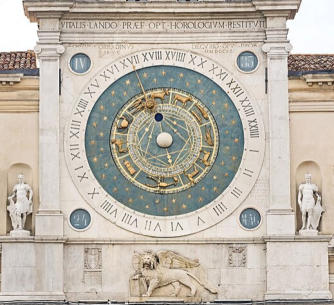
The famous astronomical clock of 1428 by Novello Dondi, the
success was such that the family name became: Dondi
dell'Orologio - Piazza del signore in Padua. Didier Descouens.
Creative Commons Attribution-Share Alike 4.0
10th December 2026
Ed. Williams
The Art of Christmas
The Festive Season brings with it the familiar
nativity scenes, winter landscapes and of course
Father Christmas, but how did these images
become synonymous with Christmas?
This lecture takes the audience on a journey from
the Medieval to the modern era explaining the
development and important iconography of these
Festive favourites. You may never look at a
Christmas card in the same way ever again.
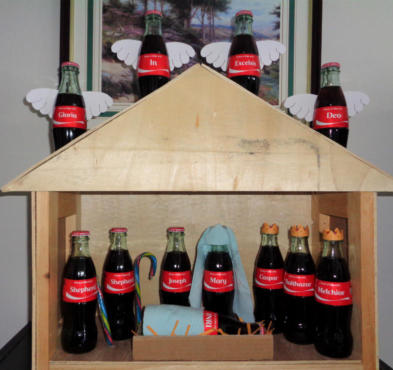
A Nativity scene where the figures are represented by
customized Coca-Cola bottles. The bottle representing
Christ is labeled "INRI," initials which often appear in artwork of Christ's crucifixion standing for
the Latin phrase meaning, "Jesus the Nazarene, King of the Jews." The bottles representing angels
say "Gloria In Excelsis Deo," lyrics from a Christian hymn which mean "Glory to God in the highest
heaven.". Author: WalksAwayFromOmelets. Creative Commons CC0 1.0 Universal Public Domain
Dedication.
No January 2027 meeting
11th February 2027
Julia Musgrave
Cezanne & Van Gogh - Death as a Career Move
Van Gogh and Cézanne made little impact on the public mind during their lifetimes – the
British art world remained in thrall to the academic art of the nineteenth century and the
French and British Impressionists.
Both were rebels with art as their cause – Van Gogh painted quickly, exploiting the
power of vibrant colour to express his emotions. Cézanne’s analytical approach led him
to ponder each and every brushstroke. Neither sold much in their lifetime – only their
artist friends appreciated the changes they brought into being.
This lecture looks at how the work of Van Gogh and Cézanne went from unsold to
blockbuster in the early years of the 20th century because a few brave, but important
art dealers and critics decided to sponsor them posthumously.
11th March 2027
Roger Askew
A Boy from Lowestoft - The Life & Works of Benjamin Britten
On Saturday November 22nd, 1913, Mrs. Edith Britten
of Lowestoft, Suffolk, gave birth to her fourth child, a
boy. She said, “Today is St. Cecilia’s Day, - the Patron
Saint of Music - he must be a musician” – and she
imagined that he would become the fourth “B”, Bach,
Beethoven, Brahms …. and Britten.
2026 will mark the 50th Anniversary of the death of
one of this country’s most original and versatile
composers, Benjamin Britten. There’s to be a new
statue of him as a boy erected on Lowestoft seafront
this summer, 2025.
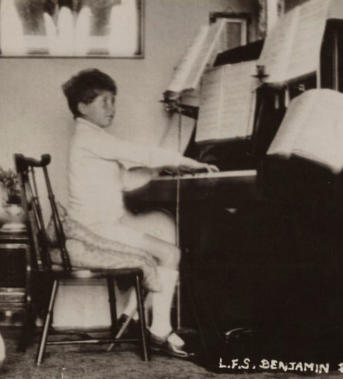
Edward Benjamin Britten (1913–76), Baron Britten.
Composer. Bromide print from 1921.
8th April 2027
Rupert Dickens
Off the Record - Album Covers 1950 to 2000
Some of the most iconic images of the 20th century were created, not for galleries or
private patrons, but for record sleeves.
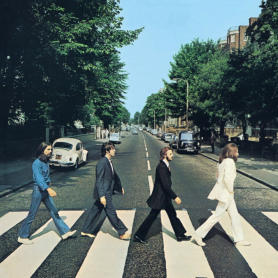
The zebra crossing immortalised on the cover of the Beatles’
Abbey Road is the site of a pilgrimage for people travelling
thousands of miles to recreate this famous scene. Album
covers have been adorned by Andy Warhol, Peter Blake,
Salvador Dali, Richard Hamilton and a host of lesser-known
artists and designers.
We will explore the art of the album cover and reveal the
close connections between visual and musical creativity in
this vibrant period of popular culture.
Front cover of Abbey Road by The Beatles. The view really is Abbey Road, London, NW8 looking
north. The gates of the Abbey Road Studios are behind the white VW Beetle on the left.
John Kosh / Iain Macmillan. Public domain
13th May 2027
Suzanne Perrin
The Art of Tea in China & Japan
Tea was first discovered and used as a herbal
remedy in China, going back centuries to the early
Han period (206 BCE – 220 CE). It was then
developed as a herbal drink for special occasions
and enjoyment in the Tang dynasty (618-907) and
used by the emperor’s court and high officials.
Delicate porcelain cups were used with a variety of
added flavours, including ginger, ginseng, orange
peel and onions.
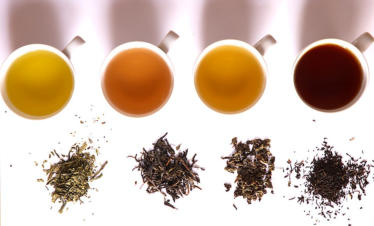
Tea of different fermentation: From left to right: Green tea (Bancha from Japan), Yellow tea
(Kekecha from China), Oolong tea (Kwai flower from China) and Black tea (Assam Sonipur Bio
FOP from India). Haneburger. Public domain
10th June 2027
Simon Seligman
Venice to Sheffield - John Ruskin's Passion for Art, Crafts & Social Justice
As writer, teacher, artist, collector, patron and critic, Ruskin was
perhaps the most complete polymath of the 19th century. He left
behind a dazzling range of writing and collections that continue to
inspire and generate debate around the world.
Perhaps most famous today as a champion of Turner and admirer
of Venice, Ruskin’s impact ranged far and wide; his ideas inspired
the Arts and Crafts Movement and the founding of the National
Trust, the Society for the Protection of Ancient Buildings, and the
Labour Movement. George Eliot wrote ‘I venerate him as one of
the great teachers of the day’, and he influenced the thinking of
Tolstoy, Proust and Gandhi among others.
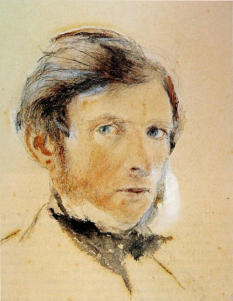
John Ruskin, self portrait, watercolour touched with body colour over pencil,
15.2 x 10 cm. Date 1861
Next Membership year 2027/8
Web site and mobile phone pages created and maintained
by Janet Groome, Handshake Computer Training